Airavateswara Temple at Dharasuram – A Poetry in Stone !
The Timeless Grandeur of “Dharasuram”
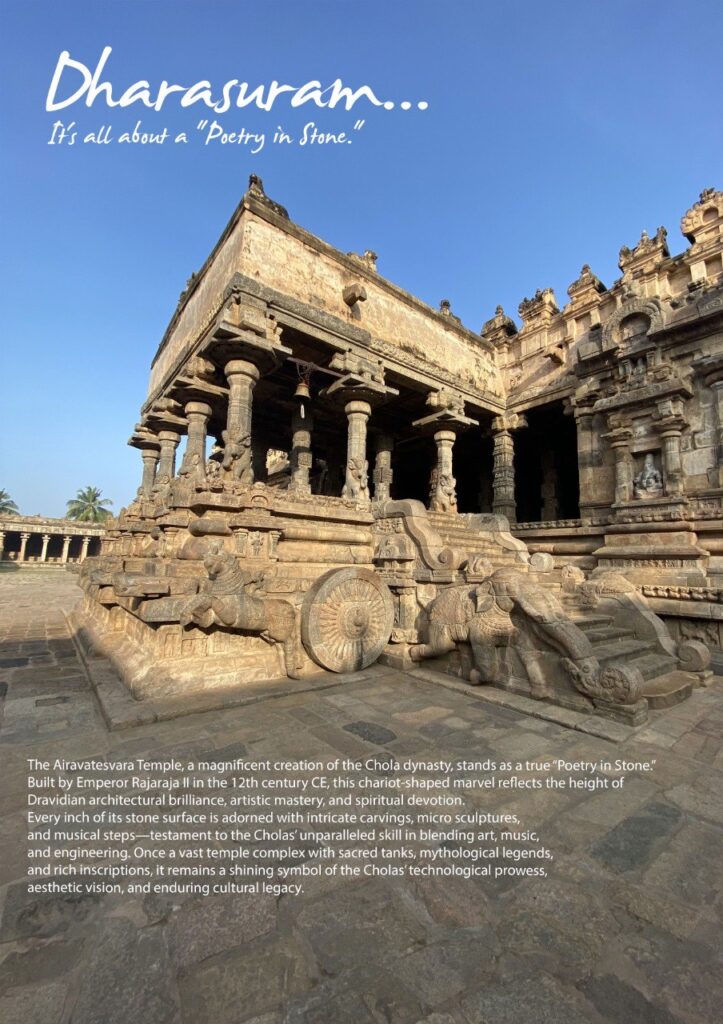
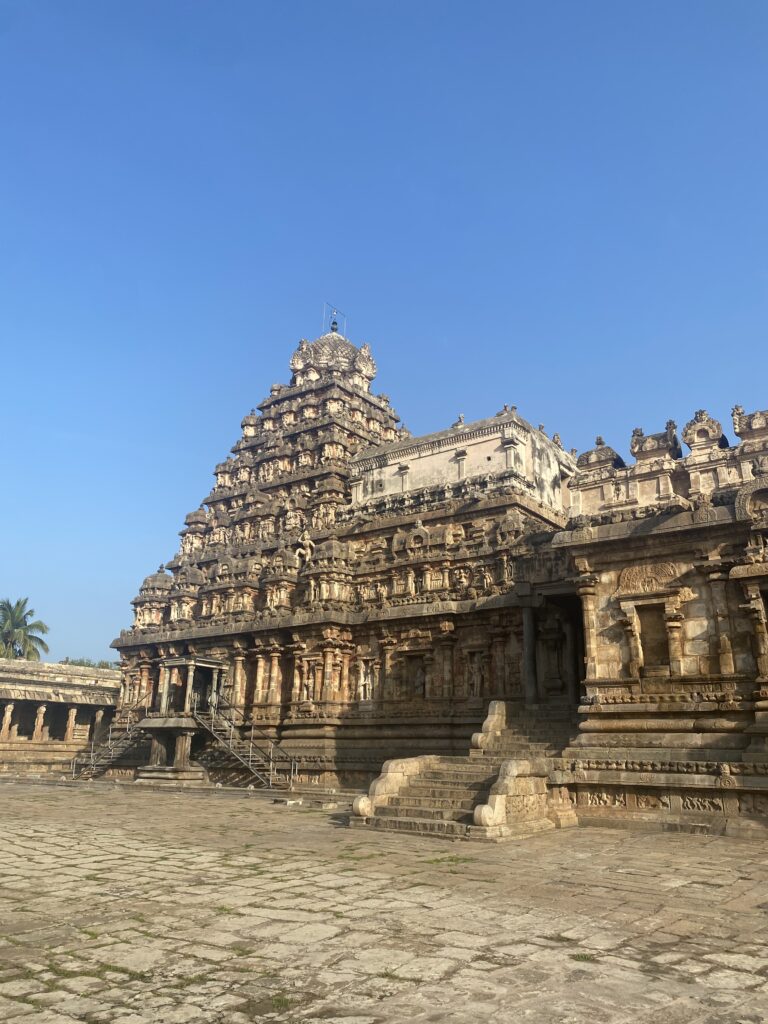
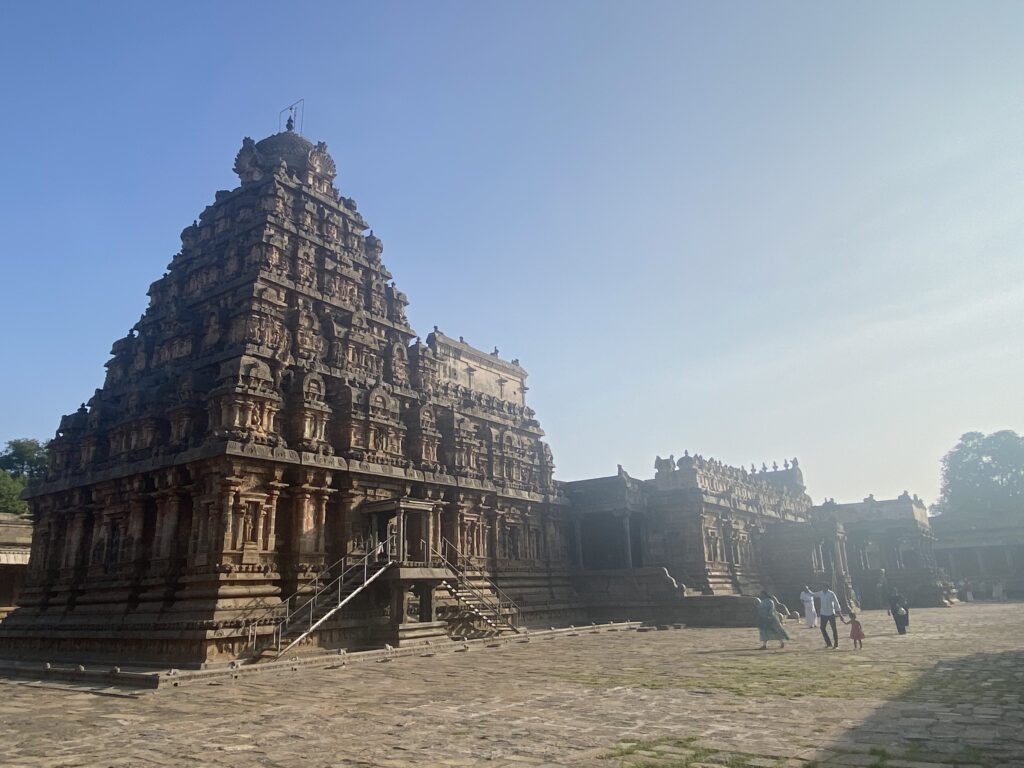
Nestled just five kilometers from Kumbakonam in the Thanjavur District of Tamil Nadu, Dharasuram is home to one of the most astonishing spectacles of human craftsmanship. As a UNESCO World Heritage Site and part of the “Great Living Chola Temples,” the Airavatesvara Temple is frequently described as “Poetry in Stone.” It is a place where stone breathes, art becomes prayer, and the stunning Dravidian architectural style reflects the peak of Chola civilization.
A Chariot of Time and Music
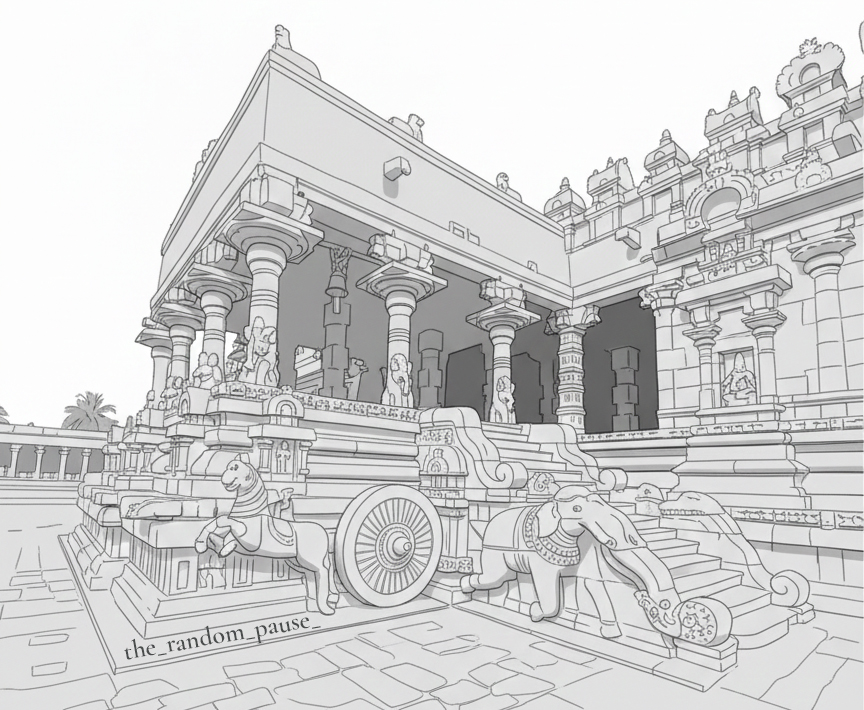
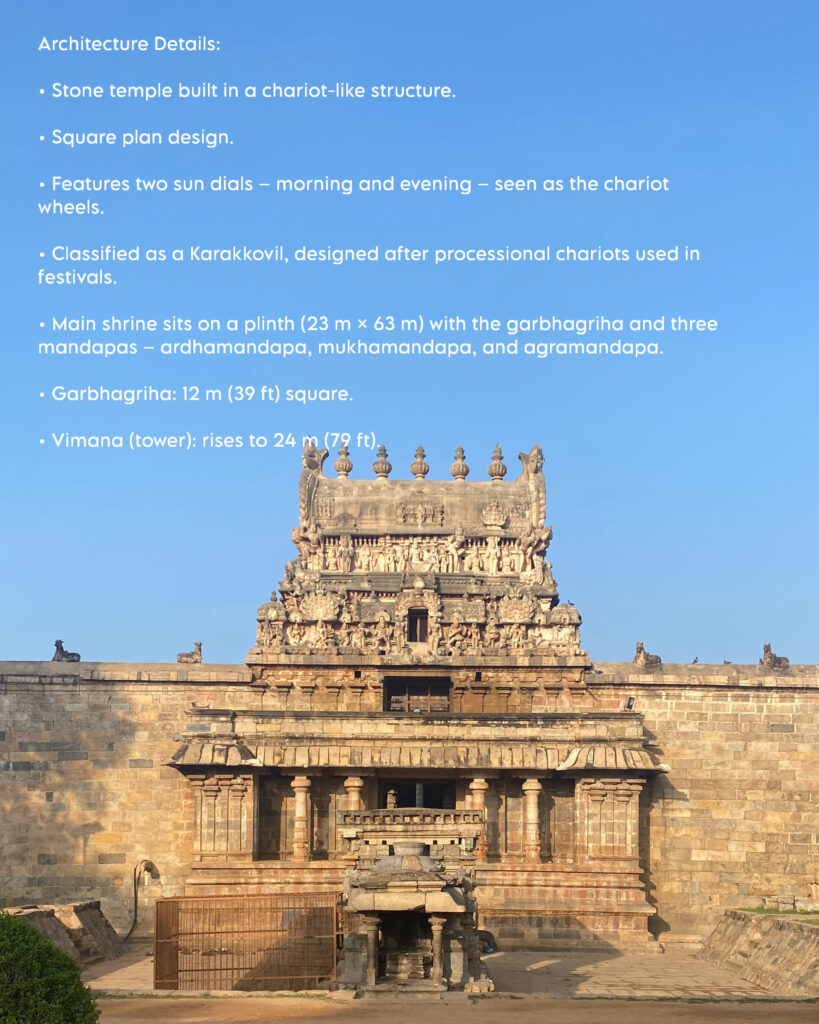
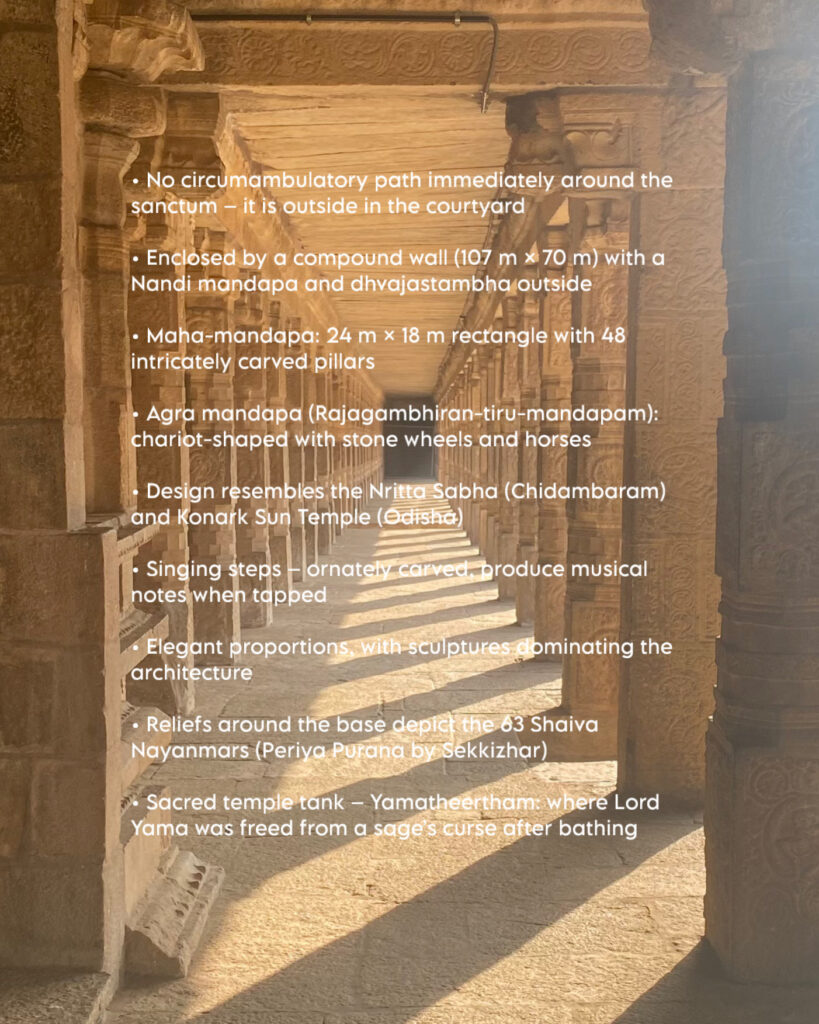
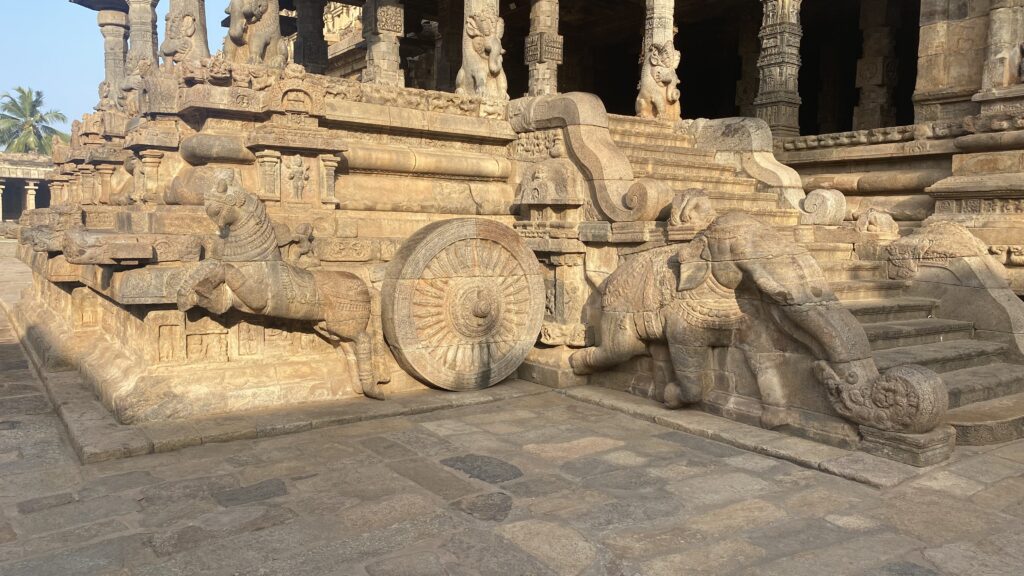
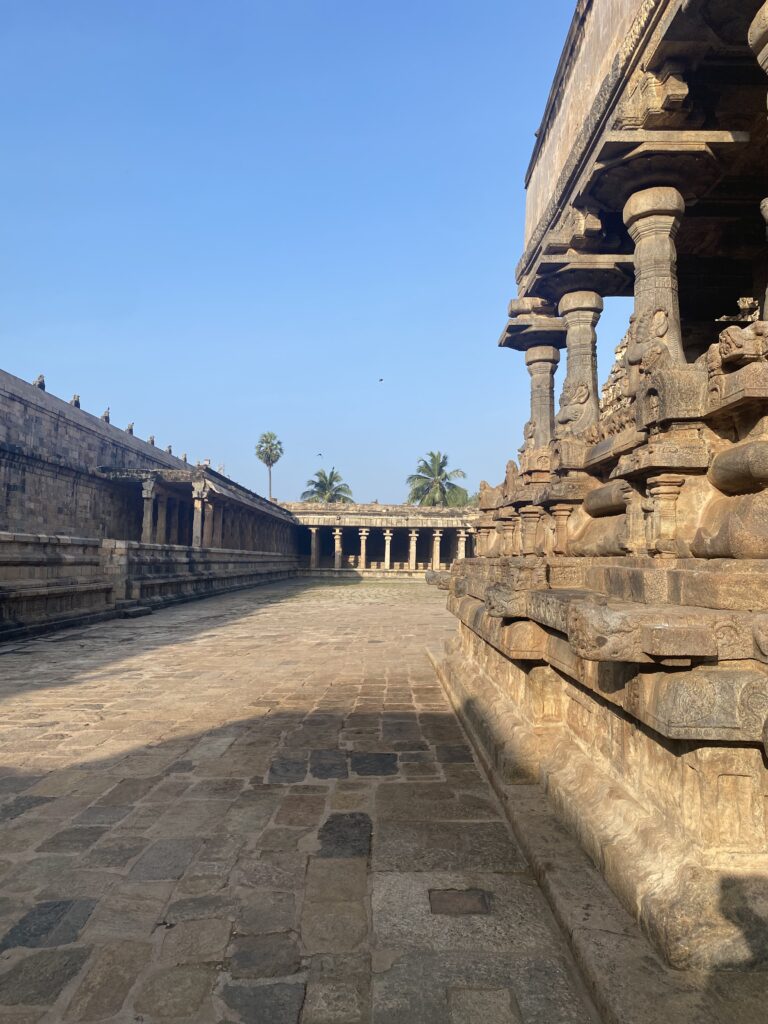
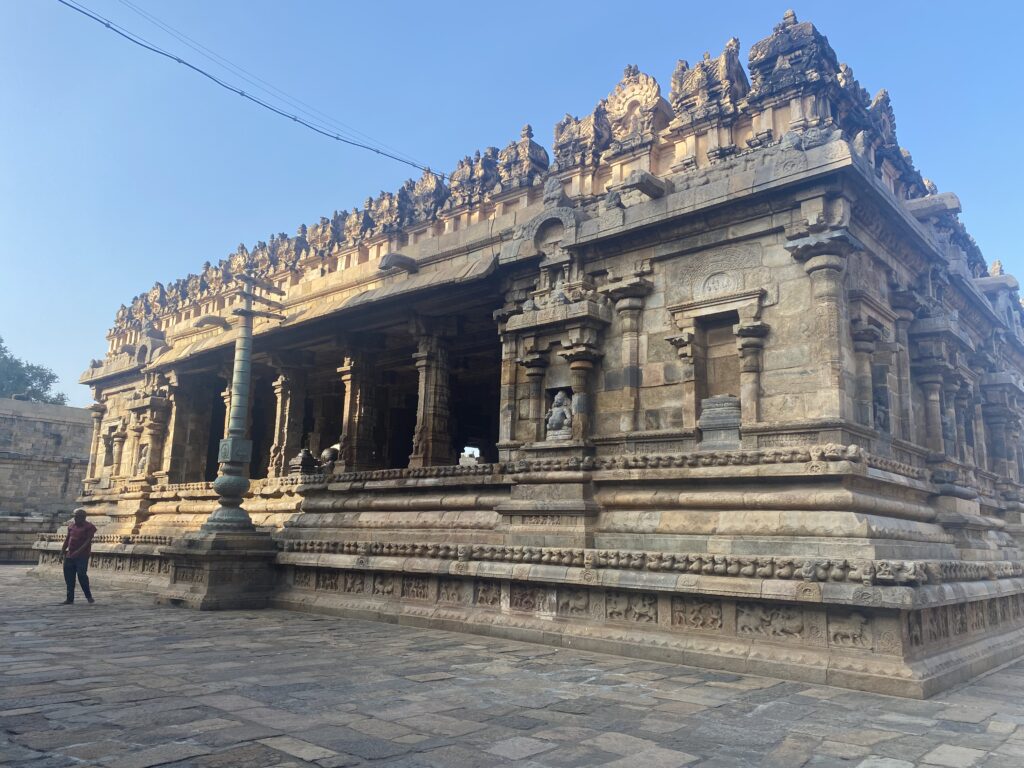
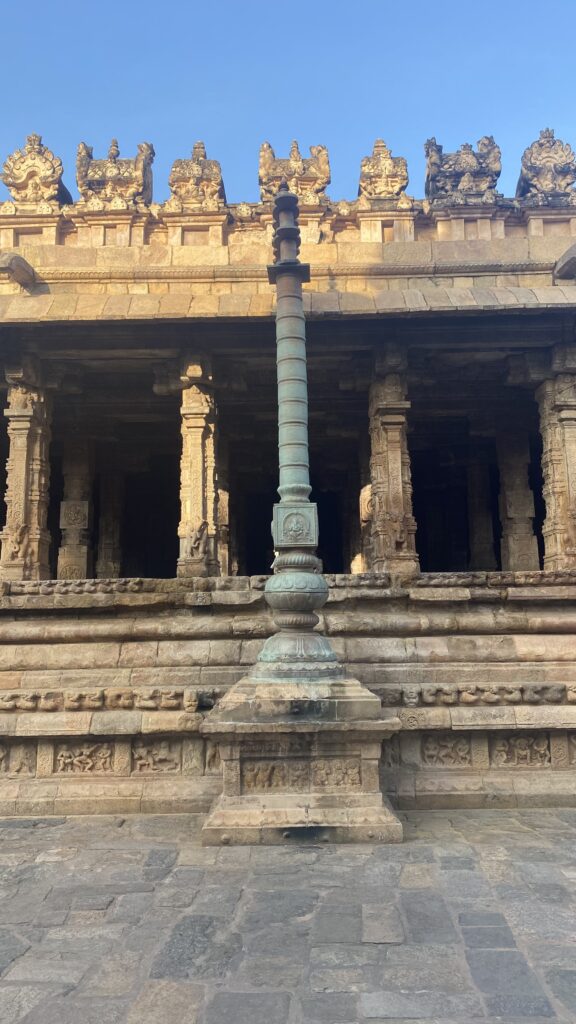
The temple’s most striking feature is its design as a “stone chariot,” complete with artistically carved wheels that double as sun dials, symbolizing the journey of light and time. Classified as a Karak Koil, the structure rests on a massive plinth measuring 23 by 63 meters.
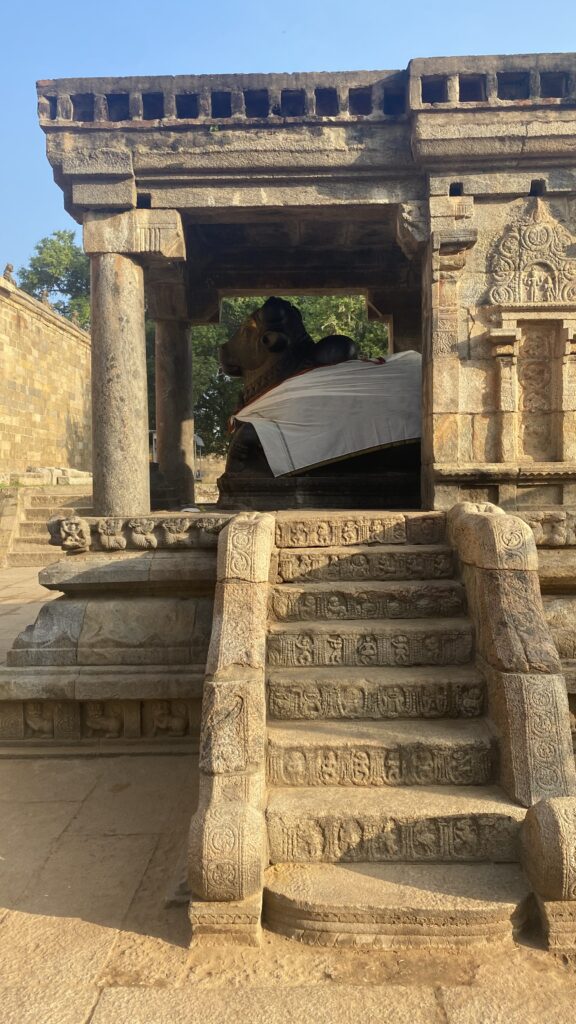
Perhaps the most fascinating intersection of music and architecture can be found in the Musical Steps. These “singing steps” lead to the balipitham and are intricately carved to produce distinct musical notes when stepped upon—a testament to the master-level skills of Chola sculptors.
Here, art becomes prayer. The Stone becomes song.
The Heart of Chola Greatness
Historically, Dharasuram—once known as “Pazhaiarai”—served as a vital center of power. It was the heart of Chola greatness, from which the accessories of their civilization flowed.
Early Roots: Battles between the Chera ruler Sengutuvan and the Chola rulers likely took place here as early as 150 A.D.
Royal Residence: Prominent rulers like Sundara Chola, Rajendra I, and Rajaraja II all resided in or ruled from Dharasuram at various times.
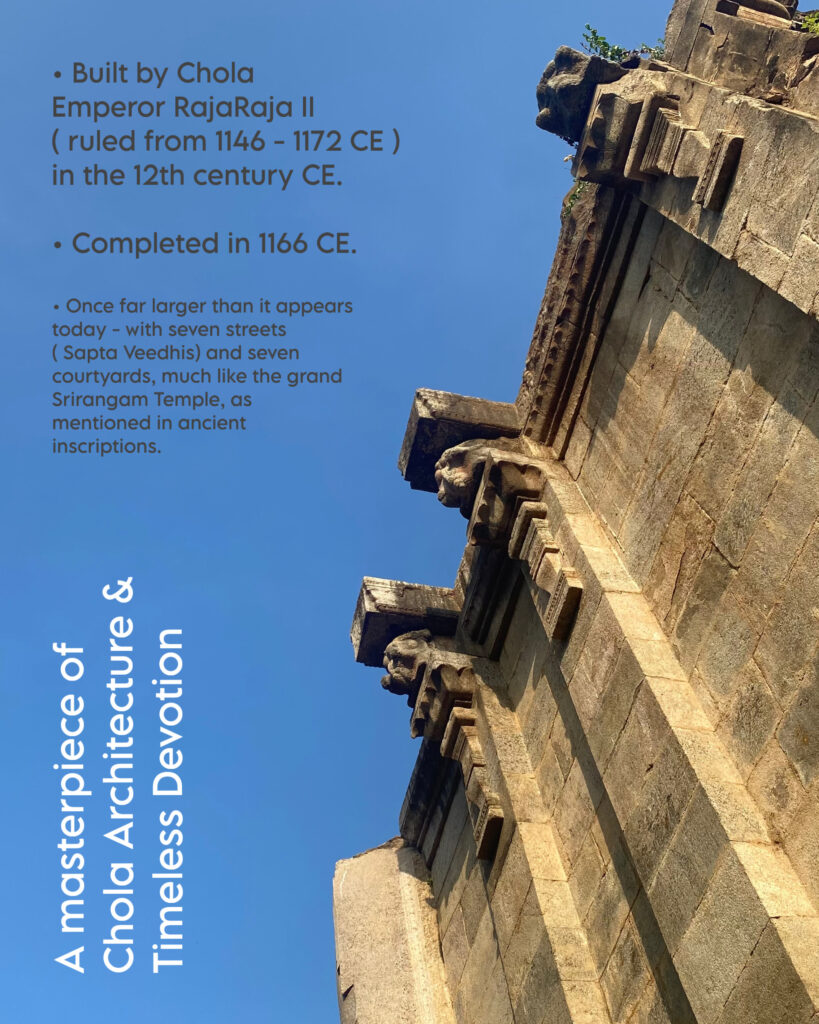
The Builder: The temple we see today was built by Chola emperor Rajaraja II in the 12th century C.E., completed around 1166 C.E. While it remains grand, inscriptions suggest it was once even larger, featuring seven streets and seven courts.
Architectural Marvels:
A Walkthrough
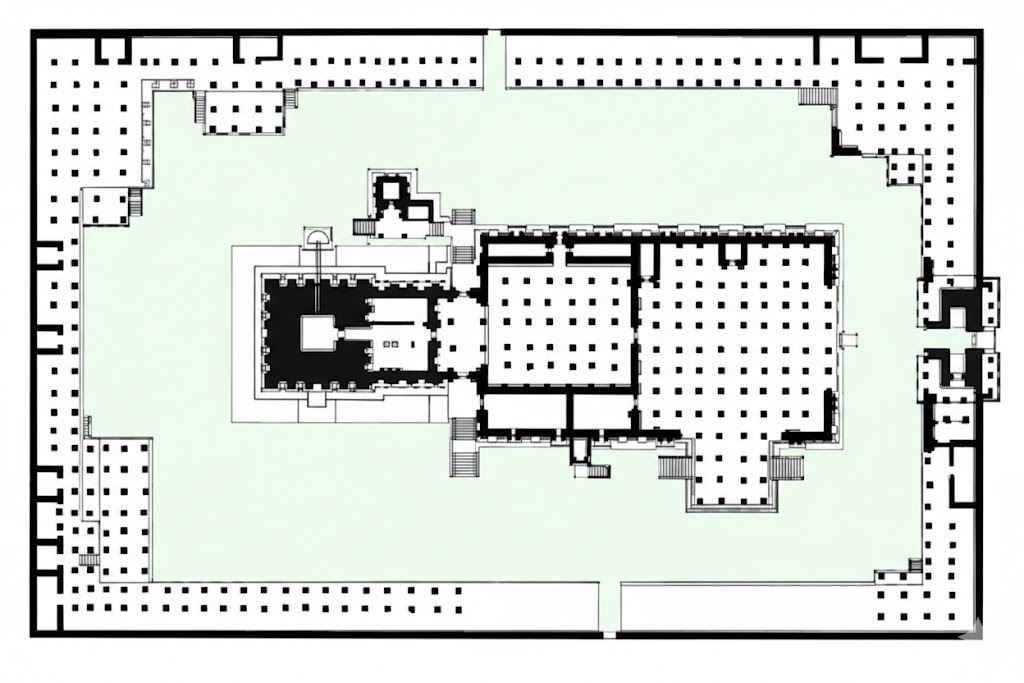
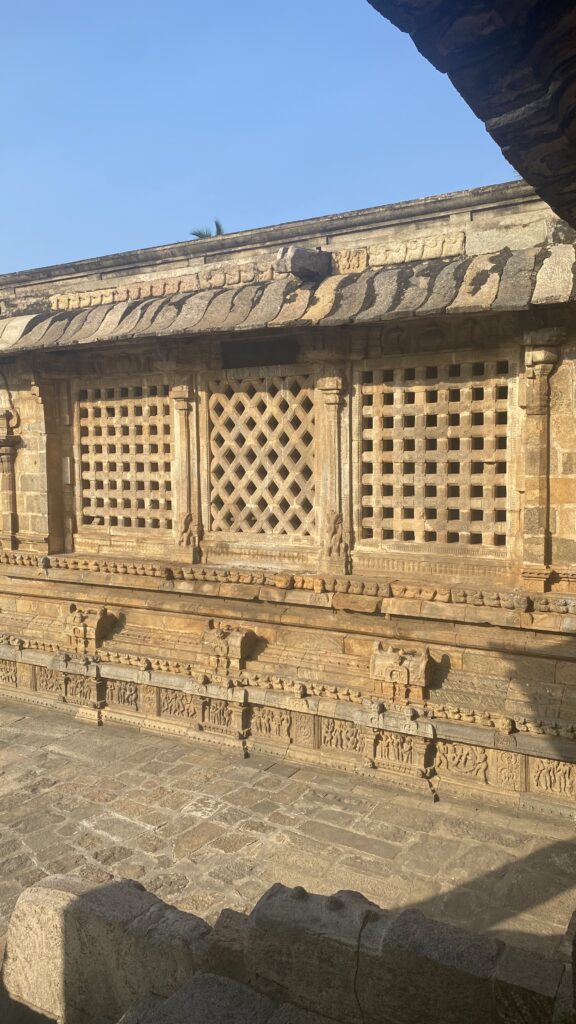
The temple is a product of a single, masterfully executed plan, avoiding the “bizarre” later additions often seen in other ancient sites.
The Garbhagriha (Inner Sanctum):
A massive 12-meter square cell with thick walls supporting a graceful Sri-Vimana tower that rises 83 feet.
The Mandapas:
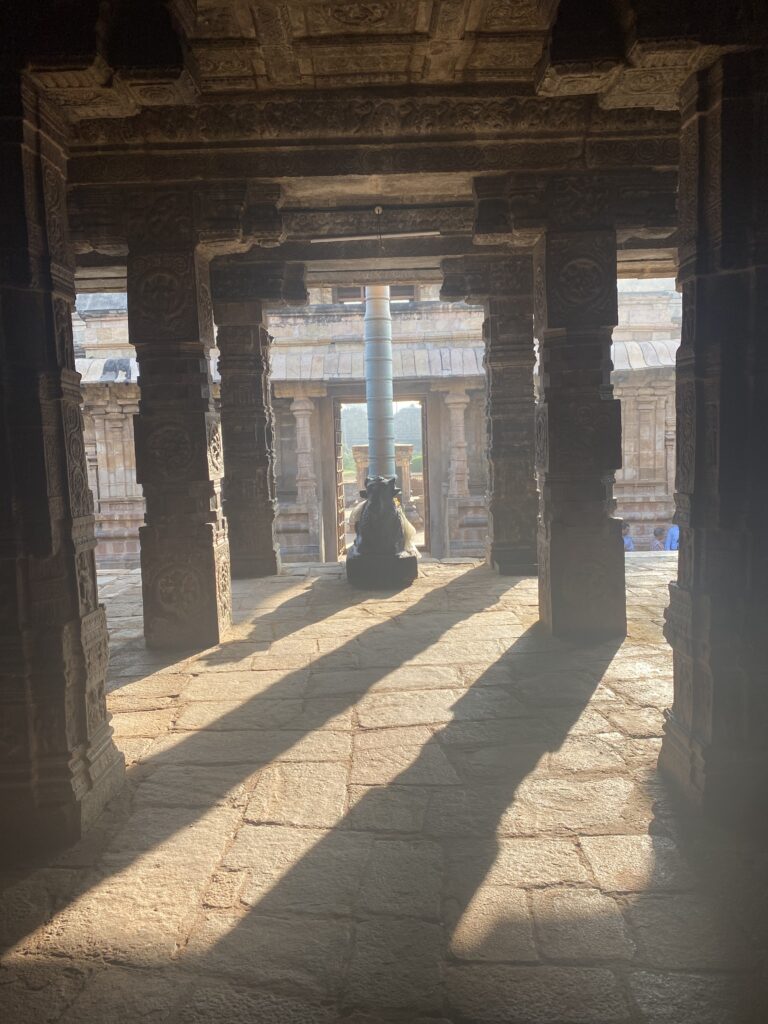
The temple features several elegant halls, including the Maha-mandapa, supported by 48 pillars, and the Agramandapa (also known as Rajagambhiran-tiru-mandapam). The Agramandapa is the section conceived as the chariot, with pillars rising from the heads of seated lions.
The Narrative Panels:
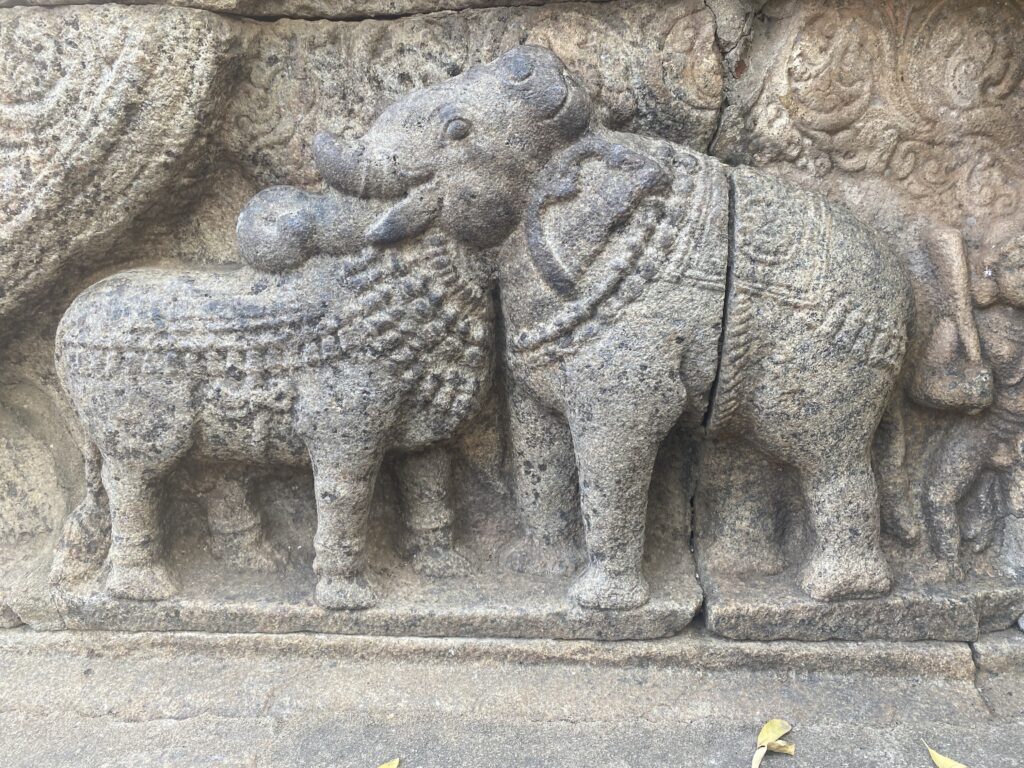
All along the base of the main temple, relief carvings narrate the stories of the 63 Nayanars (Shaiva Bhakti saints) as found in the Periya Puranam.
Divine Legends and Sacred Waters
The local mythology of Dharasuram adds a layer of spiritual depth to its stone walls. The temple is named after Airavata, Lord Indra’s white elephant, who supposedly restored his clean white skin after dipping in the temple tank. Similarly, Lord Yama, the God of Death, is said to have been cured of a burning curse after praying to Lord Shiva and bathing in these same sacred waters, known as Yamatheertham.
The Mystery of the War Trophy
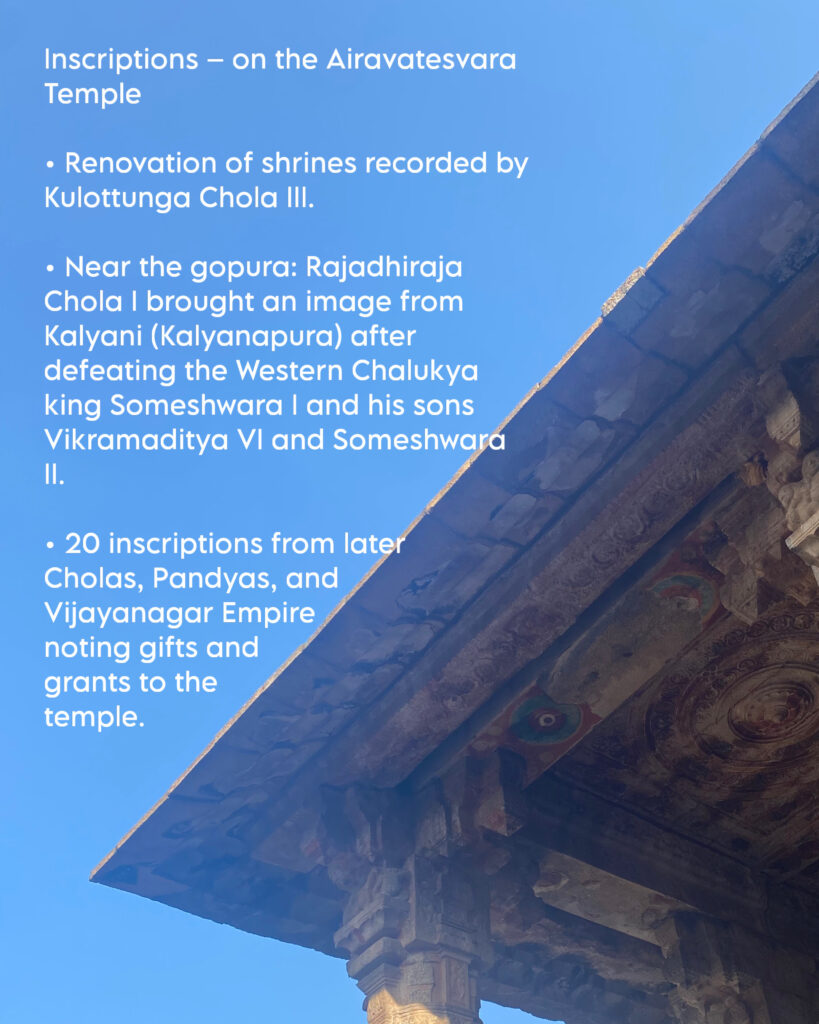
Among the many inscriptions is a striking record of a “War Trophy.” At the base of a dvarapala (guardian) image, an inscription reveals it was brought as booty by Rajadhiraja I after his successful sack of Kalyanappattan in 1054 A.D.
Because Rajaraja II built this temple nearly a century after that expedition, historians have used this inscription to debunk the theory that the temple was built using Kalyani war spoils; rather, the trophy was likely moved here from a palace later. This proves the temple is a pure evolution of the Chola architectural tradition that began at Thanjavur.
Endurance Through the Ages
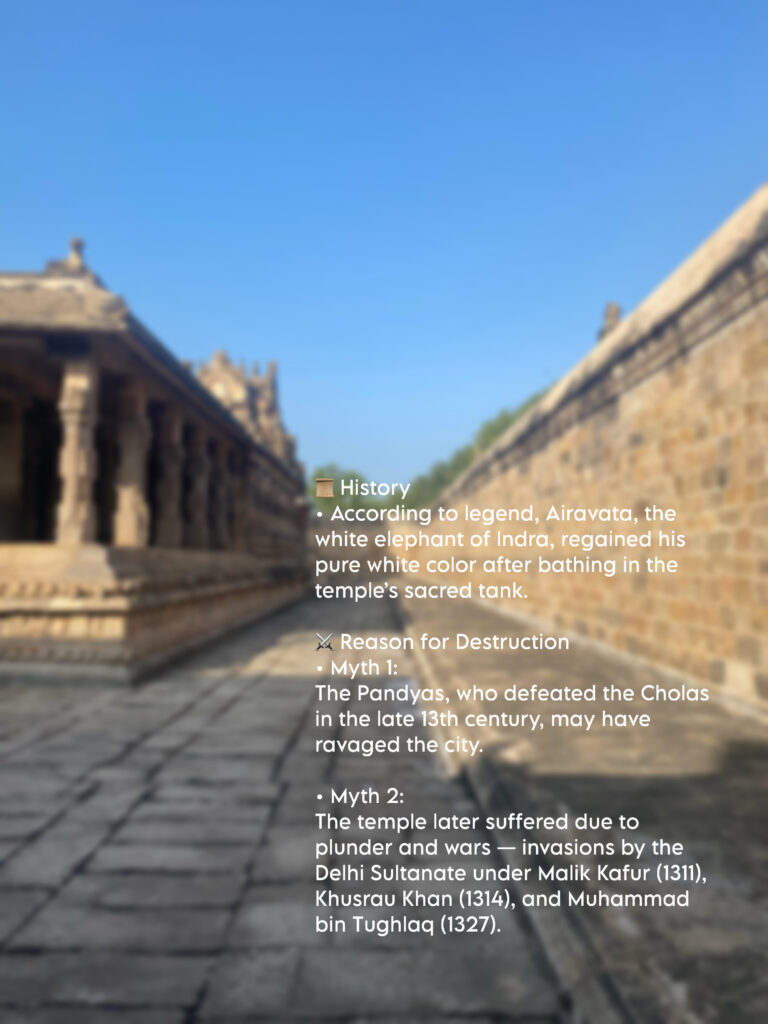
Dharasuram has survived centuries of shifting power and invasions.
•The Later Years:
Following the Cholas, the region saw rule by the Pandyas, the Nayaks, and the Marathas.
Invasions:
The town suffered severe damage during the 14th-century raids by the Delhi Sultanate (led by Malik Kafur) and later by Hyder Ali.
Legacy:
Despite these trials, the temple stands today as a magnificent “Poetry in Stone,” preserved for the world to witness the pinnacle of Dravidian art.
Planning your visit? Dharasuram is a must-see for anyone interested in history, architecture, or the spiritual heritage of South India. Its intricate carvings and “singing” stone continue to leave visitors speechless.